Rail is the only mode of transport that has reduced its overall exhaust-gas emissions since 1990, thanks to ongoing locomotive modernisation that makes each new generation more environmentally friendly. However, rail transport is projected to grow much faster in the coming years than road and air traffic. Rail is expected to become the backbone of future mobility worldwide as the most eco-friendly high-capacity transport subsystem.
Rail generates the lowest CO₂ emissions and energy consumption in operation compared with other modes, yet its environmental impact during construction and maintenance is significant and must be carefully assessed and mitigated. In rail ecology, the issue of vibration and noise pollution cannot be ignored. To achieve minimal environmental contamination by vibrations from rail vehicles—especially at high speeds—it is essential to reduce this impact at its source, including within the track structure itself.
One key solution for reducing vibrations in the emission and transmission zone—from the wheel-rail contact point through the ground to protected facilities such as buildings occupied by people—is the use of TINES® Rubbermat vibration-isolating mats made from recycled rubber. The raw material consists solely of rubber granulate and fibres from end-of-life tyres. Their application reduces the use of virgin resources and the amount of waste polluting the environment. Thus, the solution combines economic efficiency with a genuine positive environmental effect consistent with the Circular Economy (GOZ) and DNSH (Do No Significant Harm) principles.
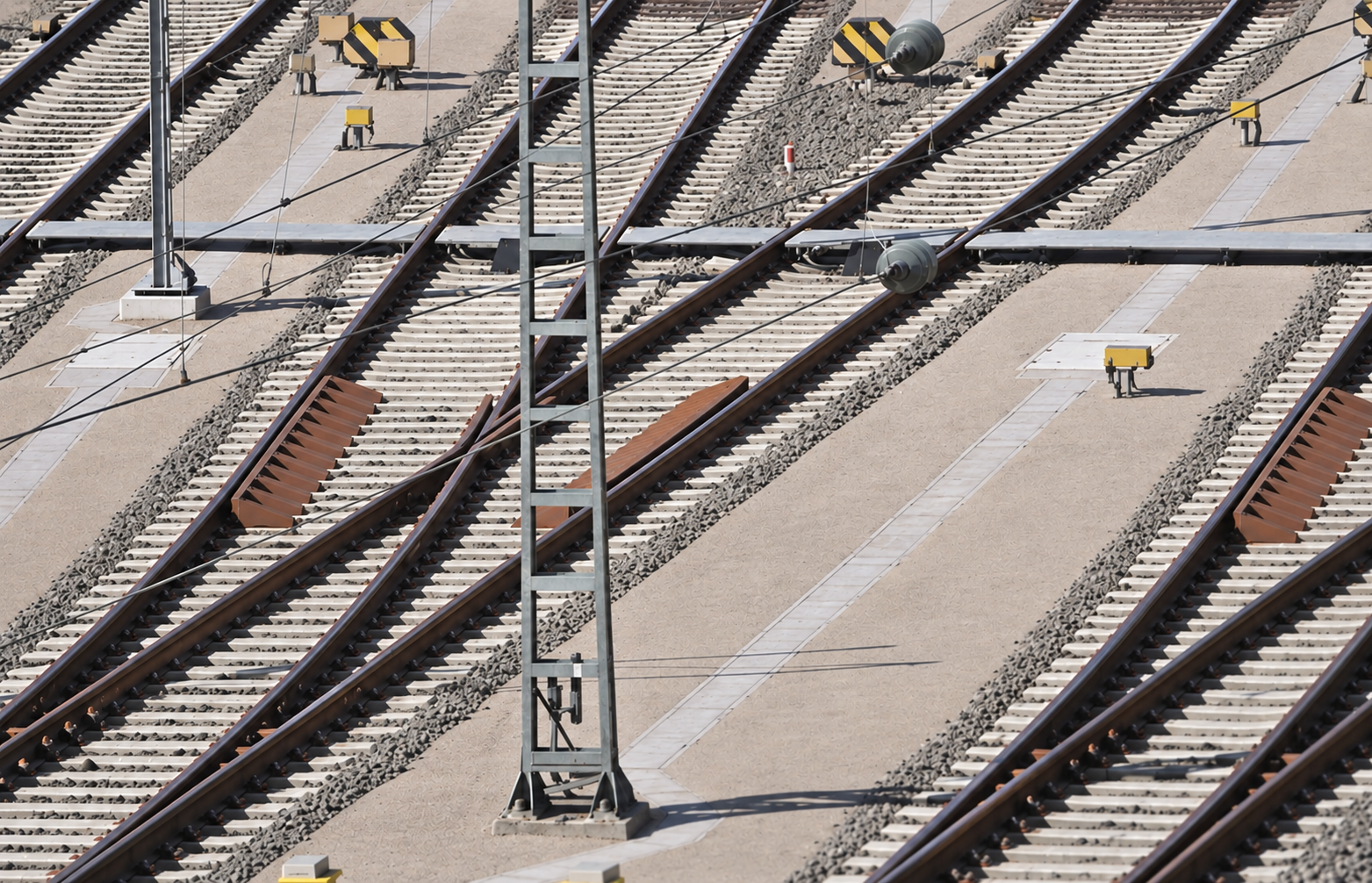
By integrating vibration-isolating mats into the rail track, the transmission of vibrations through the ground to buildings and inhabited areas is greatly reduced, leading to a lower level of structure-borne noise around the tracks. This is particularly important in urban areas where residents’ quality of life and compliance with environmental standards are priorities. The mats also play a protective role for the track structure itself. By cushioning dynamic forces, they reduce loads on both ballast and slab track components. In practice, this means less wear on those elements (e.g., stone ballast) and a longer service life for the entire track infrastructure. Additionally, limiting microcracks and deformations in track components (e.g., concrete substructures) helps maintain a stable track geometry, which is necessary for the safe and increasingly demanded high-speed operation of trains.
From the operational standpoint, vibration-isolating mats improve passenger comfort and the safety of transported goods. Lower vibrations not only reduce environmental impact but also decrease wear on rolling stock and infrastructure assets.
Technological flexibility is another important aspect of these solutions. TINES® Rubbermat can be adapted to a variety of conditions—both ballast and ballastless tracks, as well as high-speed rail, metro and urban tram systems. Different materials and designs of resilient vibration-isolating mats allow vibration-attenuation levels to be precisely matched to specific project requirements.
In ballast track structures, where the track panel rests on a layer of stone ballast, TINES® Rubbermat mats are laid directly on the sub-grade before the ballast is spread. Such an application has been implemented, among others, within the project for the construction of a new . The mats were planned in particularly sensitive locations—near existing and planned residential developments and on geotechnically unfavourable sections (e.g., areas at risk of landslides). According to the execution documentation, the mat stiffness was selected to suit the basic operating parameters of the new railway track. Vibration-isolating mats were installed beneath the entire track system in the area of the Klęczany station and siding.
In ballastless constructions, the mats are usually installed beneath the concrete track slab. One example is the ongoing construction of the Łódź cross-city tunnel, where TINES® Rubbermat mats were placed on the invert and on the tunnel-lining walls. This solution will limit the transfer of vibrations from the railway track to the tunnel structure and to buildings close to the new route. Work was carried out using modern slip-form concreting technology, ensuring high precision and optimal mat adhesion to the substrate.
During the reconstruction of Olkusz station, TINES® Rubbermat mats were installed directly on the roof slab of the pedestrian tunnel beneath the tracks. The aim was to reduce vibrations from rail traffic that could affect the structure of the tunnel. By properly selecting material parameters, a solution was found that limits the transfer of dynamic loads from passing trains, increases the durability of the tunnel structure and improves the comfort of users of the buildings above it. This project is an example of a localised application of vibration-isolation solutions in the impact zone on civil structures.
Experience from many applications of vibration-isolating mats unequivocally confirms the advisability of their use as an essential technical solution for protection against vibration and secondary noise. Their effectiveness in ballast and ballastless constructions, both on open track and in the immediate vicinity of engineering structures, is corroborated by post-implementation studies and operational experience. In an era of growing environmental and urban requirements, vibration-isolating mats are becoming an indispensable element of modern railway infrastructure. Their role in environmental protection, enhancing track-structure durability and improving the comfort of residents and passengers makes them a technology that significantly—and effectively—supports the development of sustainable rail transport, particularly in urban settings.


Read also

Comprehensive construction solutions and ballastless track systems for railways, ensuring effective vibroacoustic insulation and a guarantee of durability for mainline tracks, engineering structures (bridges, viaducts, tunnels, and rail-road crossings).

A comprehensive offer of durable materials and construction solutions for subway track surfaces allows for the reduction of vibration and noise levels in tunnels.

A comprehensive offer of durable materials for the construction of tram tracks, allowing to reduce the level of vibrations and noise in the vicinity of the route.